
Spring Fertilization for High-Mountain Tea: Rates, Phosphorus and Root Checks
Each tonne of made tea from a high-mountain garden removes about 60 kg of nitrogen, 4 kg of phosphorus and 21 kg of potassium (Tea Research and Extension Station estimate), so last year’s yield is a good starting point for this year’s rate. But the station also found that topsoil phosphorus in high-mountain gardens is often excessive and should be cut. Before adding fertilizer, dig a root-observation pit to see how deep roots go, and keep soil pH at 4.0–5.5.
Spring tea starts after the previous harvest
Tea is harvested several times a year, and each harvest removes nutrients. A good spring flush depends on replenishing the bush after the previous harvest, building roots over winter and having nutrients ready before budbreak — not on one heavy application in spring.
Working out the rate from last year’s yield
The Tea Research and Extension Station (TRES) estimates that gardens above 1,000 m remove about 60 kg N, 4 kg P and 21 kg K per tonne of made tea, with fertilizer efficiency around 20–30%. On that basis, roughly 200–300 kg N is needed per tonne of made tea.
Low-elevation gardens remove about 40 kg N, 2.5 kg P and 15 kg K per tonne, with efficiency of only 10–20%; TRES suggests 200–400 kg N per tonne. Low efficiency means most fertilizer is not taken up — raising efficiency pays better than adding more.
Cut phosphorus in high-mountain gardens
TRES soil surveys found very high topsoil phosphorus in high-mountain tea areas and recommend stopping or reducing phosphorus, and ploughing where possible to even out topsoil and subsoil levels. Using the same compound fertilizer year after year builds up some nutrients while others run short.
TRES topsoil benchmarks: available P of 21–100 mg/kg is adequate, 101–300 high and above 300 excessive; available K of 201–500 mg/kg is adequate. Test first, then decide how much phosphorus to cut.
Check the roots with an observation pit
TRES suggests digging a pit 60 cm long, 30 cm wide and 40 cm deep between two evenly growing rows to see how uniform and deep the feeder roots are. Healthy roots reach 30–40 cm; in compacted soil they rise to 10–20 cm and cannot use subsoil water or nutrients, so extra fertilizer does little.
Coarse mulches such as peanut shells are common on slopes, but they must not cover the trunk, or the bush grows adventitious roots near the surface. In one Shizhuo, Chiayi garden, three years of thick mulch left roots within the top 3 cm.
What soil pH suits tea?
Tea prefers acidic soil. TRES rates pH 4.0–5.5 as suitable, below 4.0 as strongly acidic, 5.6–6.5 as acceptable and above 6.5 as too high; topsoil organic matter of 2.1–3.0% is adequate. Tea does not need liming to pH 6 like most crops, but below 4.0 it is time to review nitrogen rates and organic matter.
Pre-flush feeding
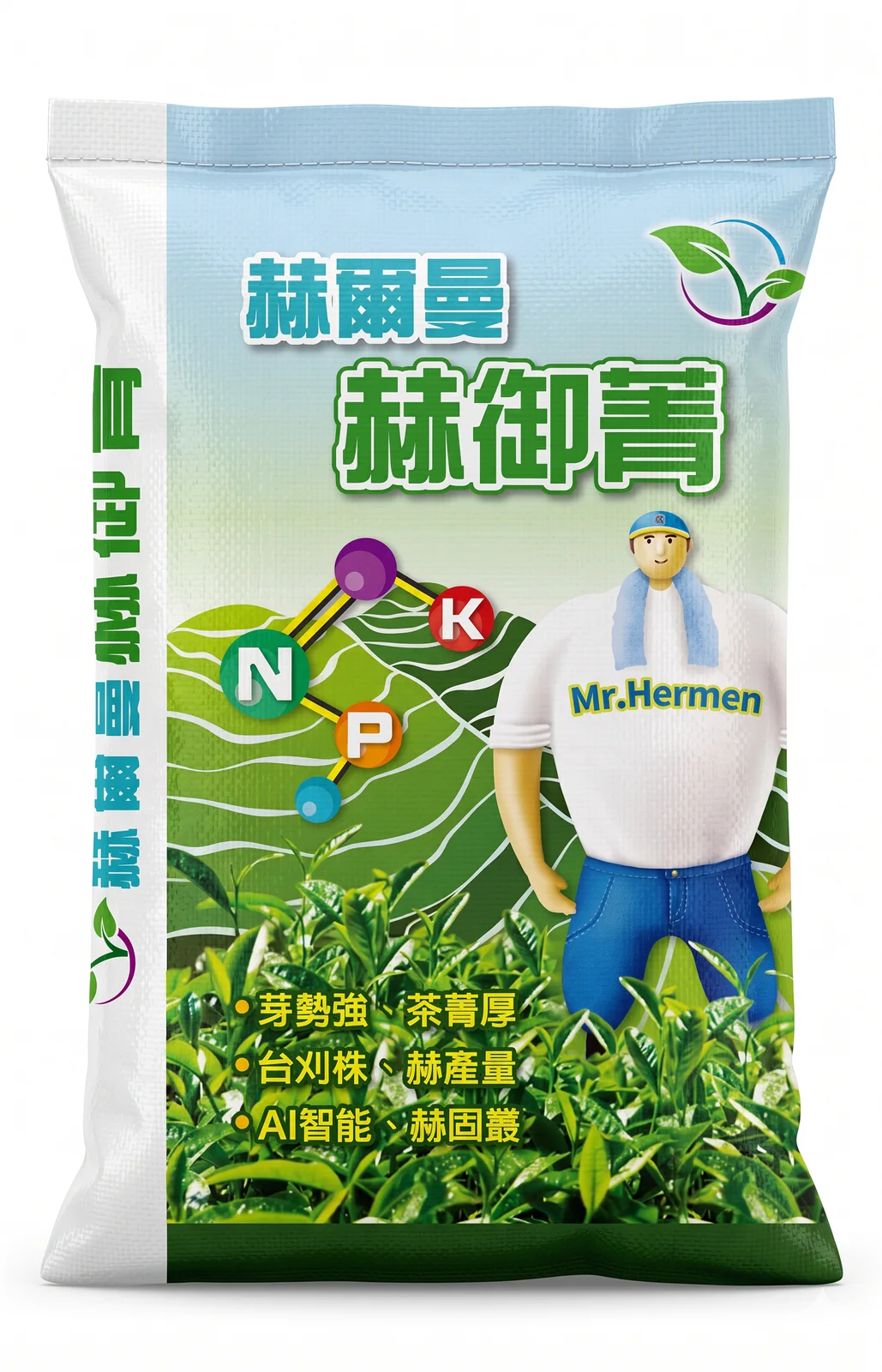
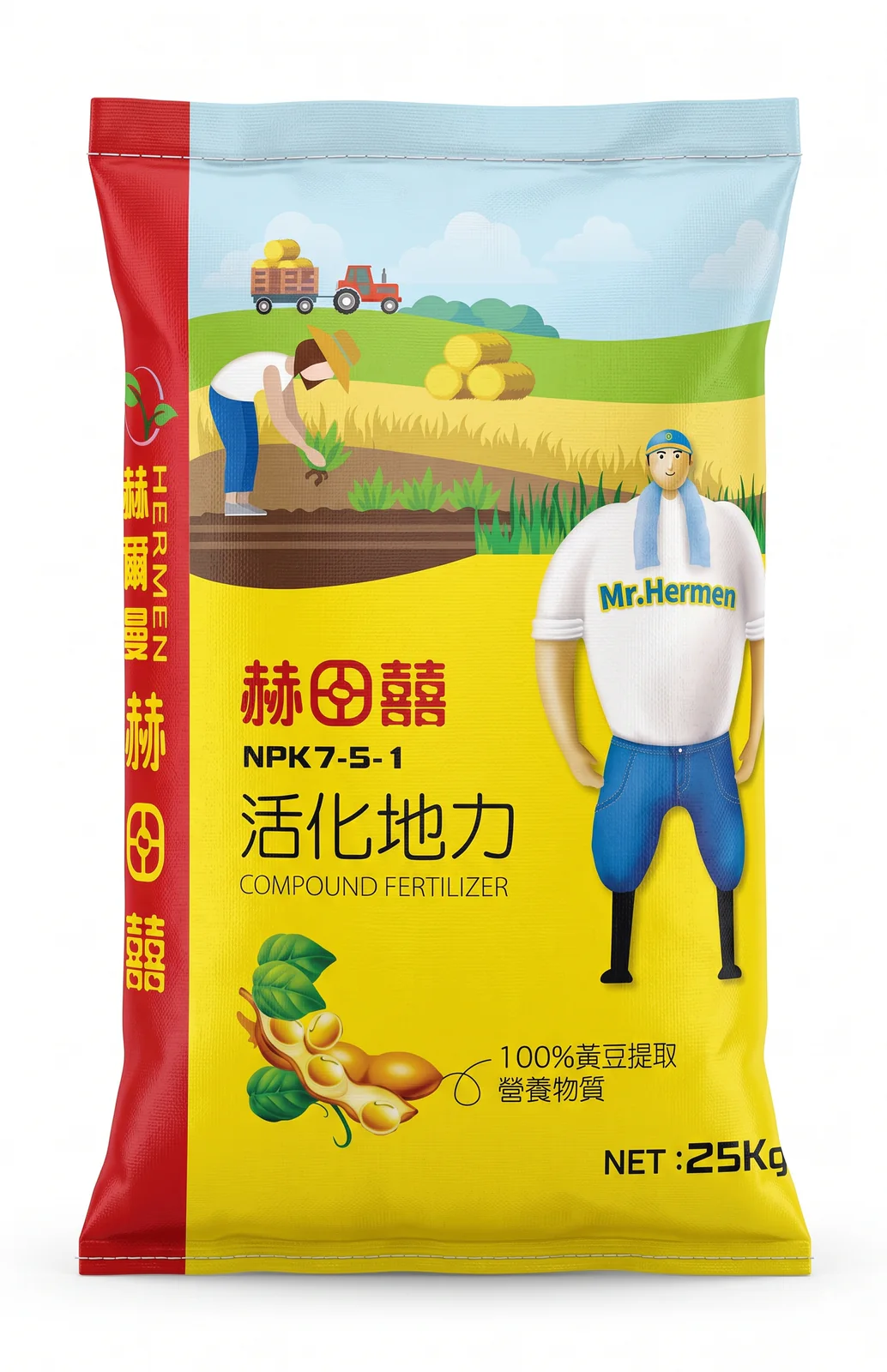
Before budbreak, have nitrogen in place for an even flush. On rainy slopes ammonium nitrogen leaches less than nitrate. HERMEN Heyujing (22-7-11) is a high-N, high-K fertilizer for pruning recovery, flush and post-harvest feeding; Hetianxi, a soybean organic fertilizer with 45% organic matter, is used for soil building. Where phosphorus is already high, watch the P ratio.
References
Wang, W.Y.: Rational fertilization of high-elevation tea gardens, Harvest Farm Magazine vol. 58 no. 24, Tea Research and Extension Station.
Wang, W.Y.: Rational fertilization of low-elevation tea gardens, Tea Research and Extension Station.
Su, Y.S.: Rational fertilization of tea gardens, Tea Research and Extension Station.
FAQ
Work from yield: TRES estimates 60 kg N, 4 kg P and 21 kg K removed per tonne of made tea, with 20–30% efficiency — roughly 200–300 kg N per tonne. Adjust by soil test.
High-mountain gardens usually do not. TRES found topsoil phosphorus very high in these areas and recommends stopping or reducing it; above 100 mg/kg available P is already high.
TRES rates pH 4.0–5.5 as suitable. Below 4.0 is strongly acidic and calls for a review of nitrogen rates and organic matter.
Keep it off the trunk, or the bush roots near the surface. Dig a 60 × 30 × 40 cm observation pit to check root depth before deciding on mulching and ploughing.