

Tea Fertilization Guide
Tea differs from most crops in being harvested several times a year, with each harvest removing nutrients and leaving the bush in deficit. Fertilization therefore cycles through post-harvest restoration, pre-flush stimulation and annual soil building — and because tea grows on slopes with concentrated rainfall, nutrient retention matters as much as nutrient supply.
Fertilization by Growth Stage
- 01
Soil Building — The Foundation
Steep, high-elevation gardens lose organic matter quickly. An annual high-organic-matter basal application loosens soil, revives microbial life and improves nutrient retention — the foundation for vigour and cup quality.
- 02
Recovery After Heavy Pruning
After heavy pruning, root vigour must be restored before bud stimulation. Build soil first, then apply a high-nitrogen tea formula once buds begin to move — otherwise flush is slow and uneven.
- 03
Pre-Flush — Preparing for Spring Tea
Pre-flush fertilization loads nutrients before buds break, aiming for even emergence. Nitrogen leads, but release must be controlled — ammonium forms leach far less than nitrate on rainy slopes.
- 04
Post-Harvest — Restoring the Bush
Every harvest removes nutrients; without prompt replacement, successive flushes thin out. Replenish immediately after picking with nitrogen-led nutrition to rebuild reserves for the next flush.
Formulas for Tea

Hetianxi
100% soybean-extracted organic matter — soil care, sweeter aroma.
Learn more →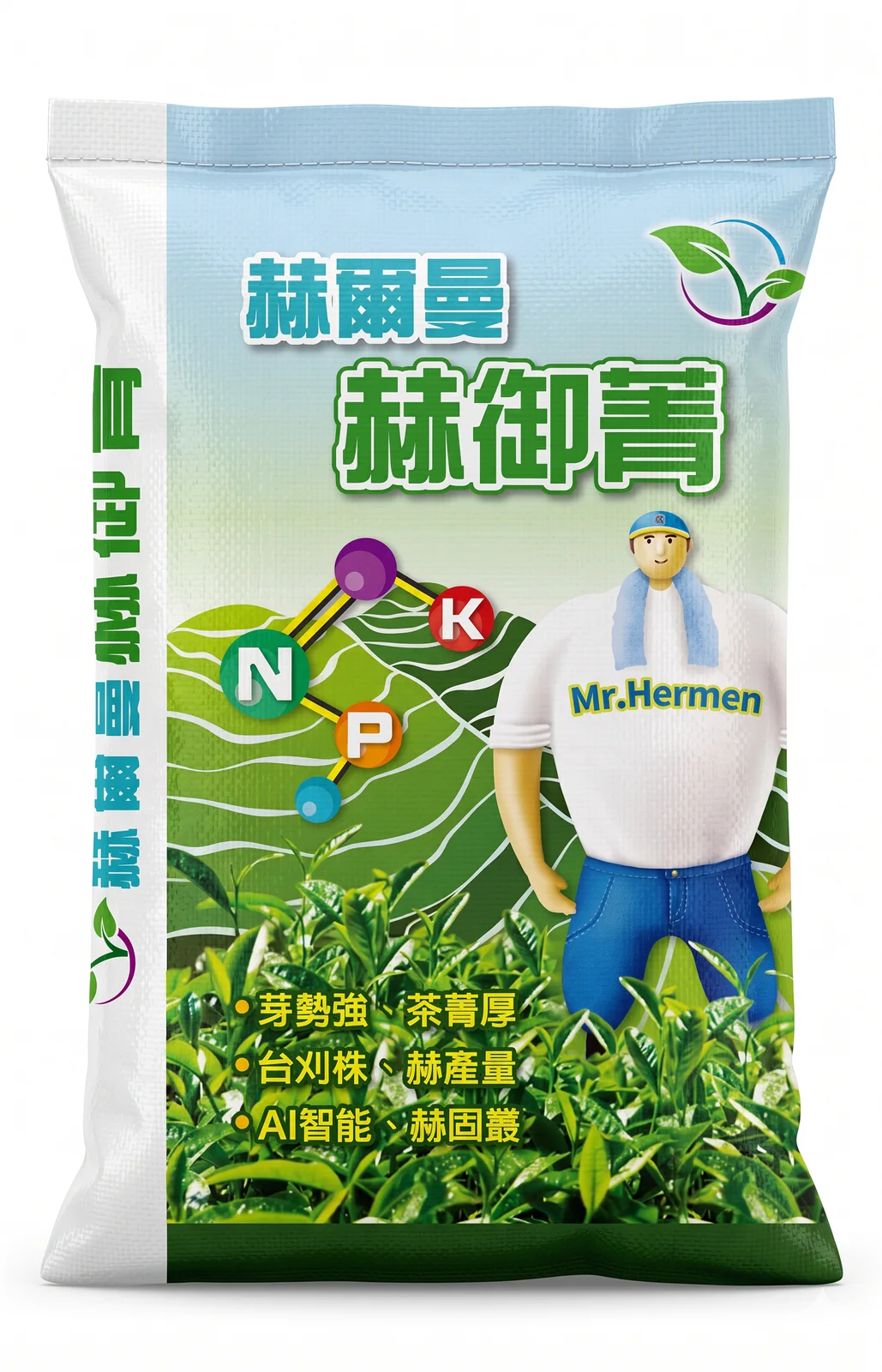
Heyujing
High N & K — the go-to for tea garden recovery after heavy pruning.
Learn more →
Jingzuan No.5
Corn-sugar enzyme + 45% organic matter — gentle, soil-revitalizing.
Learn more →
Jingzuan No.1 H.T.
Upgraded high-N functional fertilizer — 21% ammonium N + Lignin 20UP.
Learn more →
Jingzuan No.1 Plus
20.5% nitrogen + 3 functional factors — no stone powder, soil-activating.
Learn more →Further Reading
Frequently Asked Questions
Restore roots first with a high-organic-matter application, then apply a high-nitrogen tea formula once buds begin to move. Heavy quick-release nitrogen applied before roots recover is largely lost rather than absorbed.
Choose ammonium-based nitrogen, which leaches far less than nitrate, and raise the soil’s own retention capacity through organic matter and lignin-type functional inputs so nutrients stay in the root zone longer.
More often than most crops, because tea is harvested several times a season. The basic rhythm is one annual high-organic-matter basal application for soil building, a recovery application after each harvest, and a pre-flush application before budbreak. Frequency varies with the number of harvest seasons, bush age and elevation — high-mountain gardens grow more slowly and generally need fewer applications than lowland ones.
Pronounced bitterness often accompanies excess nitrogen, unbalanced nutrition and poor soil conditions. Reduce sole reliance on quick-acting nitrogen and build soil and roots with plant-based organic fertilizer, so bushes grow in a healthy soil environment — this generally improves sweetness and complexity in the cup.
Need a Plan for Your Own Field?
HERMEN’s agronomic team will tailor a fertilization plan to your crop, region and growing method.
CONTACT HERMEN