How to Fix Acidic Soil: Target pH, Dolomite Lime Rates and Fertilizer Changes
Start with a soil test: how low the pH is and whether the soil is sandy or clayey decide how much lime to apply. In the Kaohsiung District Agricultural Research and Extension Station table, raising a sandy loam from pH 5.5 to 6.5 takes 1.7 t/ha of dolomite lime, while the same change in clay takes 4.7 t/ha. Stop once the crop’s range is reached, cut excess chemical fertilizer and build organic matter — long-term heavy fertilizer use is a main cause of acidification.
What acidification does
The Kaohsiung station notes that acidification lowers nutrient availability and field productivity. Crops take up less of the same fertilizer, growers add more, and the soil becomes more acidic still.
Why soils acidify
The most common cause is long-term heavy chemical fertilizer use, as both the Taichung and Kaohsiung stations point out; the Kaohsiung station estimates that farmers commonly over-apply by about 30%. In high-rainfall areas, leaching also carries bases below the root zone.
Target pH differs by crop
From the district stations: rice 5.5–7.0 (Kaohsiung); tomato 5.6–6.7 (Hualien); mango 5.5–7.5 (Tainan); lychee orchard reference 5.5–6.5 (Kaohsiung); tea prefers acidic soil, with 4.0–5.5 suitable and only below 4.0 strongly acidic (Tea Research and Extension Station).
Dolomite lime rates by texture
Kaohsiung station table (t/ha). Raising pH 4.5 to 5.5: sand and loamy sand 0.7, sandy loam 1.2, loam 1.8, silt loam 2.8, clay 3.7.
Raising pH 5.5 to 6.5: sand and loamy sand 1.0, sandy loam 1.7, loam 2.4, silt loam 3.5, clay 4.7.
Clay needs about five times as much as sand, so copying someone else’s rate without knowing your texture easily under- or overshoots. Too much lime causes other deficiencies; stop at the crop’s range.
How to apply and how often to test
The Tainan station’s mango guidance is to correct gradually and stop at pH 6.5, testing soil every one to two years. In paddies, silicate slag can neutralize acidity and supply silicon: 3,000 kg/ha where available silica is below 40 mg/kg, 1,500–2,000 kg/ha at 40–90 mg/kg.
On acidic fields, mind the nitrogen source: ammonium sulfate acidifies soil — the mango guidance uses it deliberately to lower pH on alkaline soils.
The other way round: how do you make soil more acidic?
Acid-loving crops such as tea suit pH 4.0–5.5 (Tea Research and Extension Station). If the soil is higher, or too much lime has been applied, the pH needs to come down.
The usual method is elemental sulfur. Soil bacteria convert it to sulfuric acid, which lowers pH. It is a biological process that needs warm, moist soil and takes weeks to months — it does not acidify on contact.
The rate depends on texture and how far pH must fall; clay and high-organic soils need more than sand. Large single doses overshoot, so test first, ask your district research station for a rate, split applications and retest. Stop liming at the same time; acidifying nitrogen sources such as ammonium sulfate also lower pH year by year.
Keep organic matter at 2% or more
The Kaohsiung station recommends at least 2% soil organic matter, adding 5–10 t/ha of mature compost when it is low. Organic matter buffers pH and improves nutrient retention — the other half of the fix alongside lime.
Where to test
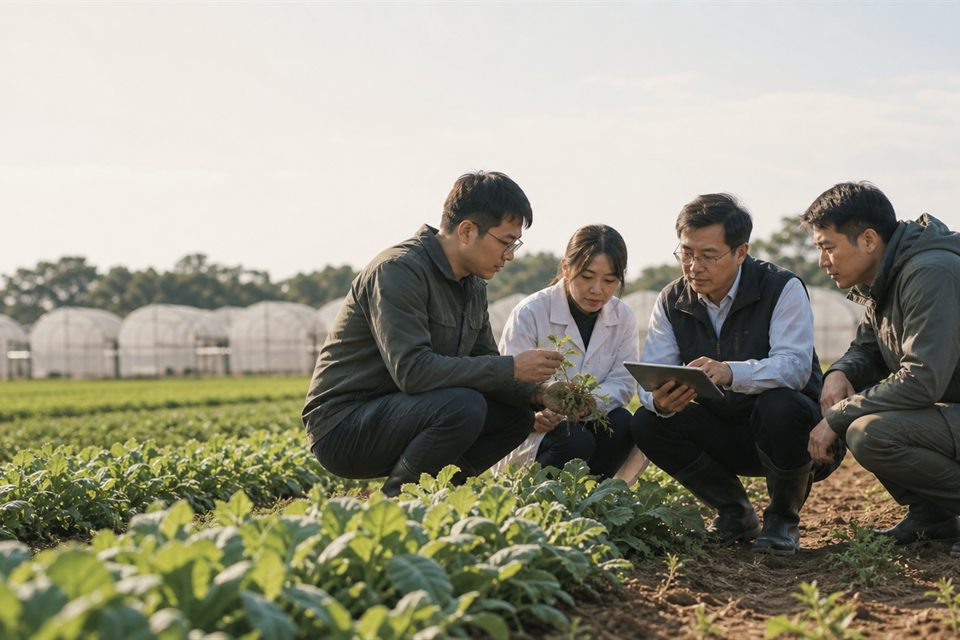
Each district research station has a soil and fertilizer lab offering soil fertility tests and crop nutrient diagnosis. Avoid recently fertilized spots, sample by layer as instructed, and set lime and fertilizer rates from the results.
Organic-matter fertilizers
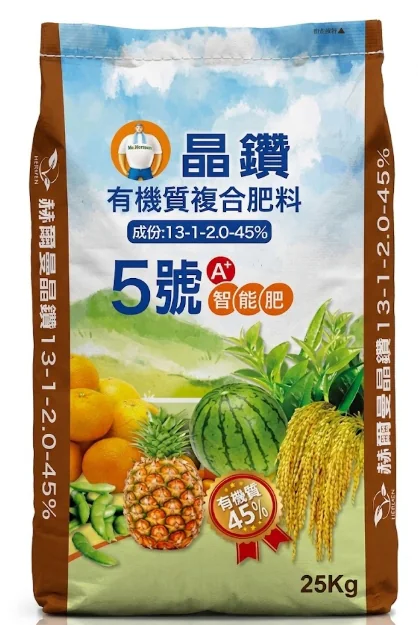
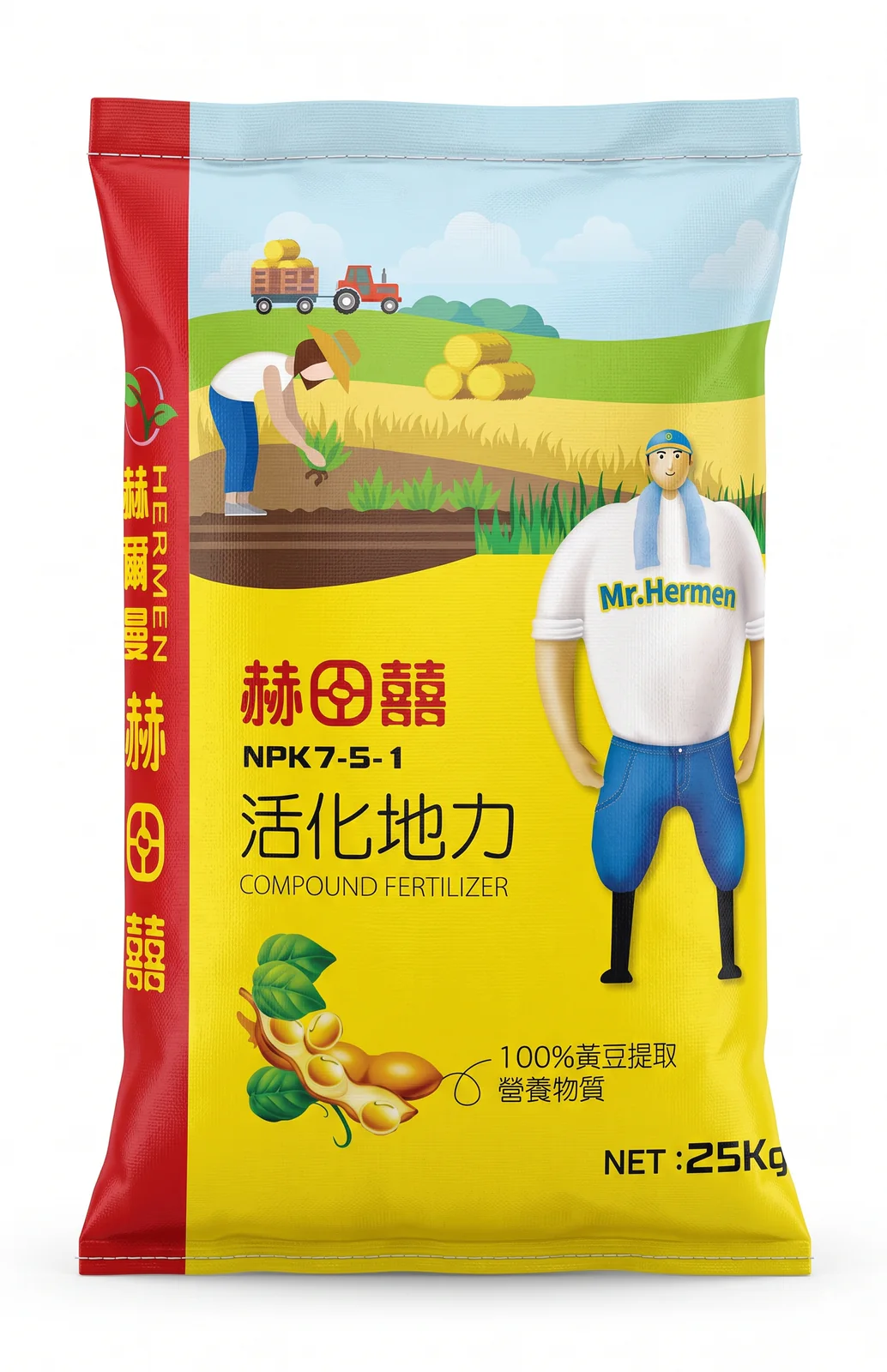
HERMEN Jingzuan No.5 contains 45% organic matter for paddy preparation and tea soil building, described on its product page as helping improve soil and new root growth; Hetianxi, a 100% soybean organic fertilizer with 45% organic matter, is used in tea gardens. Set lime and organic fertilizer rates by soil test.
References
Hsu, C.F.: Rational fertilization of Kaohsiung No. 145 rice, Kaohsiung District Agricultural Research and Extension Station (dolomite lime table).
Lin, Y.H.: Rational fertilization of Yu Her Pau lychee — a case study, Kaohsiung District Agricultural Research and Extension Station.
Chang, C.H. and Cho, C.J.: Rational fertilization for mango in Yunlin, Chiayi and Tainan, Tainan District Agricultural Research and Extension Station.
Chuan, C.H. and Yang, S.S.: Cultivation management for healthy vegetables, Hualien District Agricultural Newsletter no. 65.
Su, Y.S.: Rational fertilization of tea gardens, Tea Research and Extension Station.
FAQ
It depends on texture and target pH. To raise pH 5.5 to 6.5, the Kaohsiung table gives 1.7 t/ha for sandy loam, 2.4 for loam and 4.7 for clay; less is needed from 4.5 to 5.5.
It depends on the crop: rice suits 5.5–7.0, tomato 5.6–6.7, mango 5.5–7.5; tea prefers 4.0–5.5 and is only strongly acidic below 4.0.
Usually not. Tea suits pH 4.0–5.5; only gardens below 4.0 need attention, starting with less excess nitrogen and more organic matter.
Organic matter buffers pH and improves retention, but clearly acidic soil still needs lime by soil test. Use both, and cut excess chemical fertilizer.
Apply elemental sulfur, which soil bacteria turn into sulfuric acid over weeks to months in warm, moist soil. Base the rate on a soil test and texture, split applications and stop liming.