Why Lychee Drops Fruit: Drop Waves, Pests and a Fertilizer Calendar
Lychee drops fruit in several waves after flowering; the first is the largest and is usually normal physiological drop, while later and pre-harvest drops cost the most yield. Cut open fallen fruit first: bore holes in the stalk or seed point to pests such as the lychee fruit borer, while intact fruit indicates physiological drop. In a Kaohsiung station Yu Her Pau demonstration orchard, fertilizer split into July, January, March and April applications used far less than farmer practice and gave fruit about 1 °Brix sweeter.
How many waves of fruit drop are there?
Every lychee tree sheds part of its crop to match its load. A Hainan University study of A4 seedless lychee recorded four drop peaks: 9–12, 21–27 and 39–42 days after flowering, and 51–60 days (pre-harvest). The first wave was the largest, but pre-harvest drop caused the main yield loss.
Timing varies with variety and climate, so record when each wave happens in your own orchard.
Pest drop or physiological drop?
Cut fallen fruit open. Lychee fruit borer larvae feed on the seed of young fruit and later attack the stalk end, causing early drop. Bore holes or frass mean a pest problem that fertilizer cannot fix — use approved controls or ask your local research station.
Intact fruit that detached cleanly at the stalk is physiological drop; look at pollination weather, water and tree vigor.
A fertilizer calendar from a demonstration orchard
The Kaohsiung District Agricultural Research and Extension Station tested a Yu Her Pau orchard in Hengchun, Pingtung: pH 5.3 (reference 5.5–6.5), organic matter 0.69% (reference 2–4%), with low available calcium and magnesium. It recommended about 1,000 kg/ha of dolomite lime and 8,000 kg/ha of mature compost.
Annual straight fertilizers were about 1,000 kg/ha ammonium sulfate, 1,600 kg/ha superphosphate and 480 kg/ha potassium chloride, split as: July — 50% of ammonium sulfate, 50% superphosphate, 40% KCl; January — 20%, 50%, 40%; March — 30% ammonium sulfate and 10% KCl; April — 10% KCl. Each application was worked in shallowly, covered with soil and mulched with leaves.
Farmers in the same orchard were applying over three times as much ammonium sulfate. Fruit size, weight and yield were similar, but the recommended plot’s fruit was about 1 °Brix sweeter, at lower fertilizer cost.
Calcium: fix the soil first
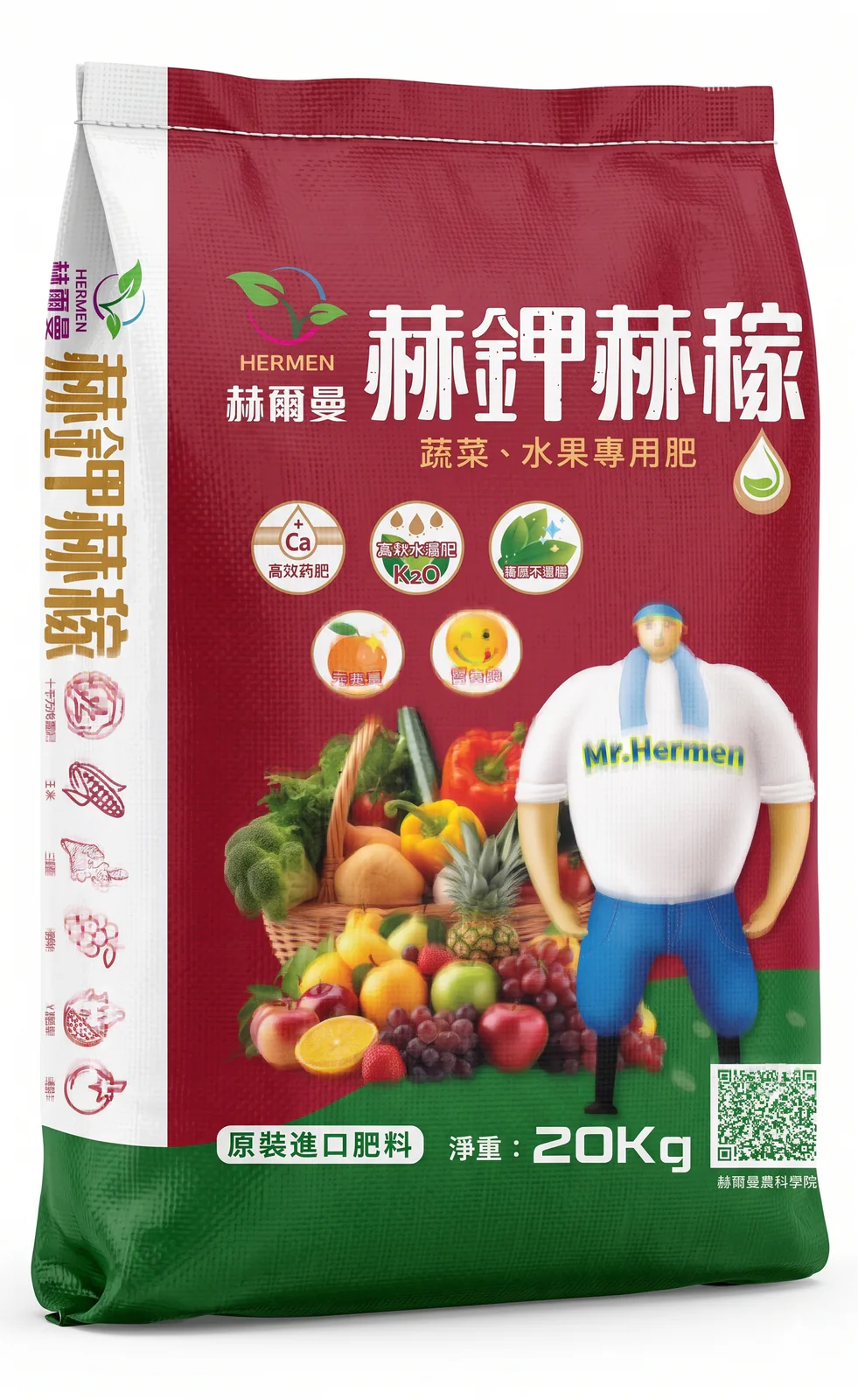
Calcium moves slowly within the plant and reaches fruit mainly through root uptake and water flow. Where soil is acidic and low in calcium, liming addresses the cause better than emergency high-strength sprays. When calcium is needed at fruit set, HERMEN Jen Gai Yong (granular calcium nitrate) is a fast-dissolving calcium fertilizer labeled for fruit trees in rapid growth and early fruit; Hejia Hejia (15-6-25+Ca) is used from fruiting to coloring. Follow the label.
Keep water steady at fruit set
Long dry spells or sudden heavy rain during early fruit development stress the tree and increase drop. Irrigate in dry spells and mulch after fertilizing to keep soil moisture steady.
Use leaf analysis too
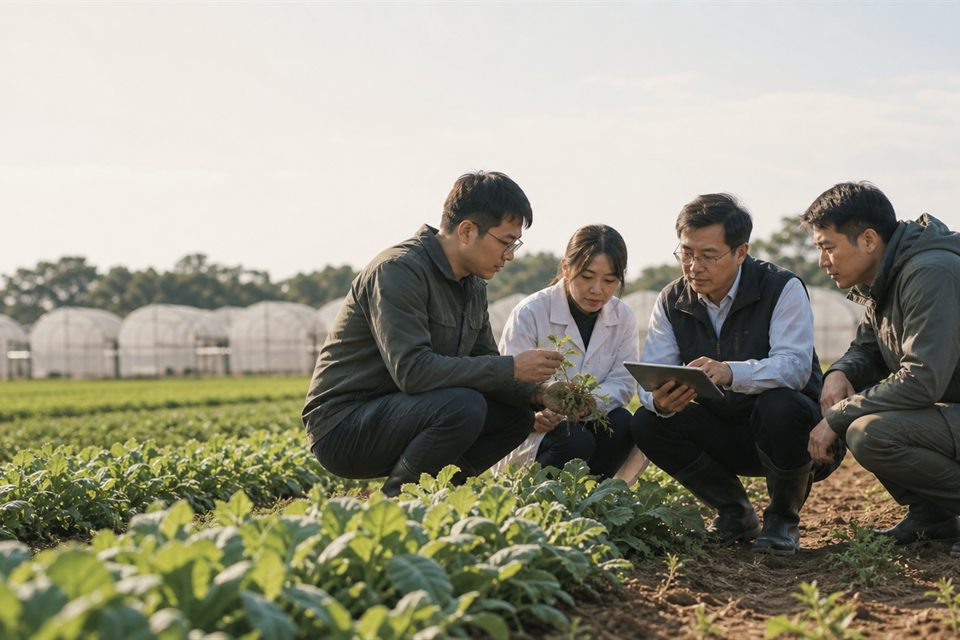
The Kaohsiung station notes that soil tests alone have blind spots. Sample about 25 mature leaves from just below the flower panicles at panicle emergence and send them to a district research station’s soil and fertilizer lab.
References
Lin, Y.H.: Rational fertilization of Yu Her Pau lychee — a case study, Kaohsiung District Agricultural Research and Extension Station.
Fu, Y.N., Li, M.F., Wu, F. et al.: Observation on the physiological fruit drop of A4 seedless lychee, Journal of Tropical Biology 8(3), 2017.
Su, Y.S.: Rational fertilization of tea gardens, Tea Research and Extension Station (functions of essential elements).
FAQ
It may be normal physiological drop or pests such as the lychee fruit borer. Bore holes or frass mean pests; intact fruit that detached cleanly points to water, vigor or nutrition.
The Kaohsiung station demonstration orchard used four applications: July (after harvest), January, March and April, with different N, P and K shares at each.
In that orchard: about 1,000 kg/ha ammonium sulfate, 1,600 kg/ha superphosphate and 480 kg/ha potassium chloride per year, plus dolomite lime and compost. Adjust to your own soil test.
Test the soil first. Lime acidic, low-calcium soils; if calcium is still needed at fruit set, use a soluble calcium fertilizer per the label and keep soil moisture steady.