Is Tomato Blossom-End Rot a Calcium Deficiency? Causes, Watering and Fertilizing
Blossom-end rot means the fruit cannot get enough calcium — not necessarily that the soil lacks it. In hot or cold weather, dry soil and weak roots stop calcium reaching the blossom end. The Hualien District Agricultural Research and Extension Station recommends steady watering after fruit set, deep tillage with more organic matter, less nitrogen and potassium, and 1,000–1,500 kg/ha of lime materials at bed preparation; tomatoes suit soil pH 5.6–6.7.
What does blossom-end rot look like?
A water-soaked spot appears at the blossom end of the fruit, then turns dark brown, sunken and leathery, usually during rapid fruit growth. It is a physiological disorder, not an infection, though damaged tissue can be invaded by other pathogens.
Is blossom-end rot contagious? Which other crops get it?
No. Blossom-end rot is a physiological disorder caused by a local calcium shortage in the fruit, not by a pathogen, so fungicides do not help; watering, roots and fertilization are what need fixing.
The same disorder appears in sweet peppers, chillies, watermelon, squash and zucchini — any fast-swelling fruit. The causes and fixes are the same as for tomato.
Why fruit lacks calcium when the soil has it
The Hualien District Agricultural Research and Extension Station explains that in hot or cold conditions, overly dry soil and poor root growth reduce calcium uptake, and calcium already absorbed stays where it is instead of moving to the fruit, so fruit tissue dies.
Calcium moves with water; when leaves transpire heavily they take most of it. The real drivers are often water and roots, not calcium alone. High soil salinity also makes water uptake harder.
Water: most critical from first flower to peak fruiting
Tomatoes need water most from first flowering to peak fruiting. After fruit set, water steadily to avoid imbalances that cut calcium uptake. Irrigate the day before topdressing so fertilizer dissolves easily.
Rates and topdressing schedule
Hualien station recommendations, with 20 t/ha of compost: N 150–250 kg/ha, P2O5 100–150 kg/ha and K2O 100–150 kg/ha.
Apply all phosphorus as basal. Split nitrogen and potassium as 30% basal, then 24% at 20–25 days after transplanting, 23% at 40–50 days and 23% at 60–75 days. Excess nitrogen or uncomposted poultry or pig manure causes rank growth, fewer flower buds and abnormal flowers.
How to prevent it
The station’s measures: till deeply, apply more organic fertilizer, use less nitrogen and potassium, and incorporate lime materials at 1,000–1,500 kg/ha at bed preparation. Tomatoes suit pH 5.6–6.7 and deep, well-drained sandy loam rich in organic matter.
How to treat blossom-end rot: what to do with affected fruit
Damaged fruit will not recover; remove it early to reduce the plant’s load and secondary rot. Then review recent irrigation, soil moisture and roots, and adjust watering and topdressing so later trusses are spared.
When calcium is needed
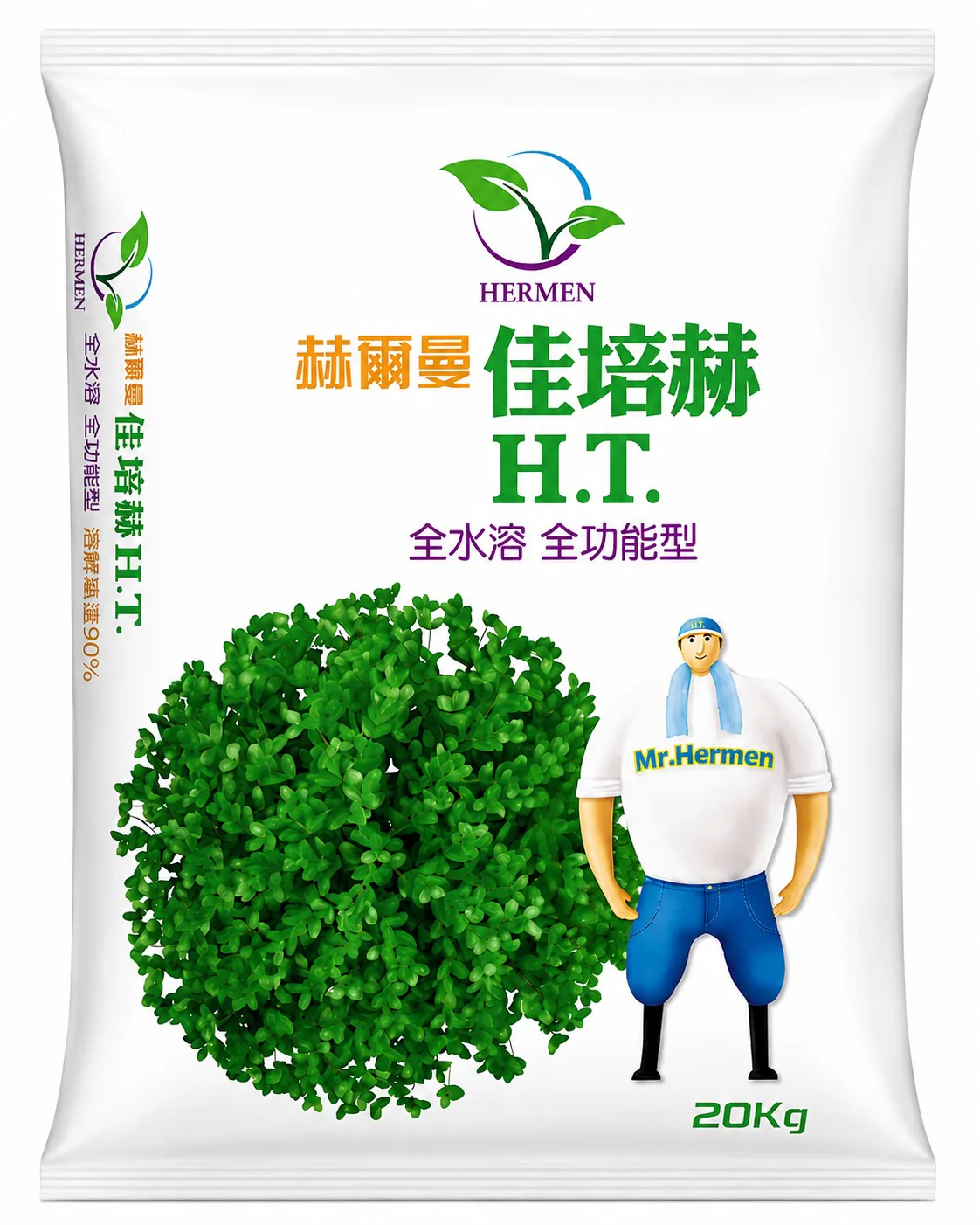
HERMEN Jen Gai Yong (granular calcium nitrate) is a fast-dissolving calcium fertilizer labeled for fruiting crops in rapid growth and early fruit, with a note that tomato blossom-end rot also needs steady irrigation. Calcium is supportive; steady water and healthy roots come first. Follow the label.
References
Chuan, C.H. and Yang, S.S.: Cultivation management for healthy vegetables — tomato and green onion, Hualien District Agricultural Newsletter no. 65, 2008.
FAQ
The fruit is short of calcium, but the soil often is not. Dry soil and weak roots in hot or cold weather stop calcium reaching the fruit, so steady water and root health come first.
Sprays are only supportive. Calcium moves with water from the roots; keep watering steady after fruit set, till deeply, add organic matter and limit nitrogen and potassium.
The Hualien station recommends N 150–250, P2O5 100–150 and K2O 100–150 kg/ha with 20 t/ha compost; phosphorus all basal, nitrogen and potassium split into basal and three topdressings.
pH 5.6–6.7. Acidic fields can receive 1,000–1,500 kg/ha of lime materials at bed preparation.
No. It is a physiological calcium disorder, not a disease, so fungicides will not help. Peppers, watermelon, squash and zucchini can also be affected; steady watering and healthy roots fix it.