Rice Lodging: Causes, Nitrogen Rates and Prevention
The most common cause of rice lodging is too much nitrogen: plants grow lush with weak stems and fall over in late-season rain or typhoons. In a Taichung District Agricultural Research and Extension Station demonstration in Shetou, Changhua, farmers were applying 270 kg N/ha — nearly double the recommended 140 kg. Prevention starts with total nitrogen and timing: concentrate fertilizer early in the season and at panicle initiation, and avoid heavy late nitrogen.
What causes rice to lodge?
The Taichung station notes that Taiwanese rice often lodges late in the season after heavy rain or typhoons, mainly because of over-fertilization. Too much nitrogen makes plants lush and soft, raises pest and disease pressure during the plum-rain season, and leaves stems unable to stand up to wind and rain.
Variety, dense planting, poor drainage and disease all add to the risk, but over-fertilization is the factor most often overlooked — and the easiest to fix.
How much nitrogen is recommended?
In the 2009 first crop, the station compared practices at two Changhua sites. The recommended rate in Shetou was N 140, P2O5 60 and K2O 50 kg/ha; farmers were applying 270, 147 and 157 kg/ha. In Zhutang, the farmer practice was 200, 120 and 110 kg/ha.
The national Crop Fertilization Manual recommends 110–140 kg N/ha for the first crop of japonica rice in central, southern and eastern Taiwan, and 90–120 kg N/ha for the second crop. Add up the nitrogen in every bag you applied last season and compare.
Does cutting fertilizer cut yield?
To be candid: that season had good weather and no typhoons, so the farmer-practice plots had more panicles and higher yield (7,513 vs 6,767 kg/ha in Shetou). But the recommended plots used over 40% less fertilizer and fewer pesticides, earned more in real terms, and produced better rice — 5.50% green kernels versus 9.88%, with lower protein and better eating quality.
Extra nitrogen can look like extra yield in a calm year; in a wet or stormy year it becomes lodging and disease.
The two windows that matter
The station advises concentrating fertilizer in early growth (to set panicle number) and at panicle initiation (to set grains per panicle). Fertilizer at other times does not raise yield and tends to increase disease and lodging.
The manual schedules topdressing at about 15, 30 and 45 days after transplanting for the first crop and 10, 20 and 30 days for the second. Apply panicle fertilizer when the young panicle on the main stem is about 2 mm long, and reduce or delay it if leaves are very dark or disease is present.
Dense planting also causes lodging
The Taichung station recommends 24–26 seedling trays per 0.1 ha. Many growers use 28 or more to avoid replanting gaps, putting 13 or more seedlings in each hill, yet harvest only 16–18 panicles per hill. More seedlings do not mean more panicles, and crowded hills raise disease and lodging risk.
Potassium and silicon
Potassium supports water regulation and sound tissue and should be applied according to soil-test potassium. But the usual problem in lodged fields is excess nitrogen, not a shortage of potassium, and extra potassium cannot cancel out excess nitrogen.
Paddies that receive heavy chemical fertilizer for years tend to acidify; rice grows best at soil pH 5.5–7.0. The Kaohsiung station recommends lime materials or silicate slag for acidic paddies: 3,000 kg/ha of slag when available silica is below 40 mg/kg, and 1,500–2,000 kg/ha at 40–90 mg/kg.
If the crop has already lodged
Do not try to stand large areas back up — it tears roots. Drain the field, check whether panicles are lying in muddy water, and decide on early harvest based on maturity and weather. If disease is involved, ask your local research station or plant doctor about approved control options.
Record this season’s fertilizer dates, products and rates alongside where the crop lodged so you know what to cut next season.
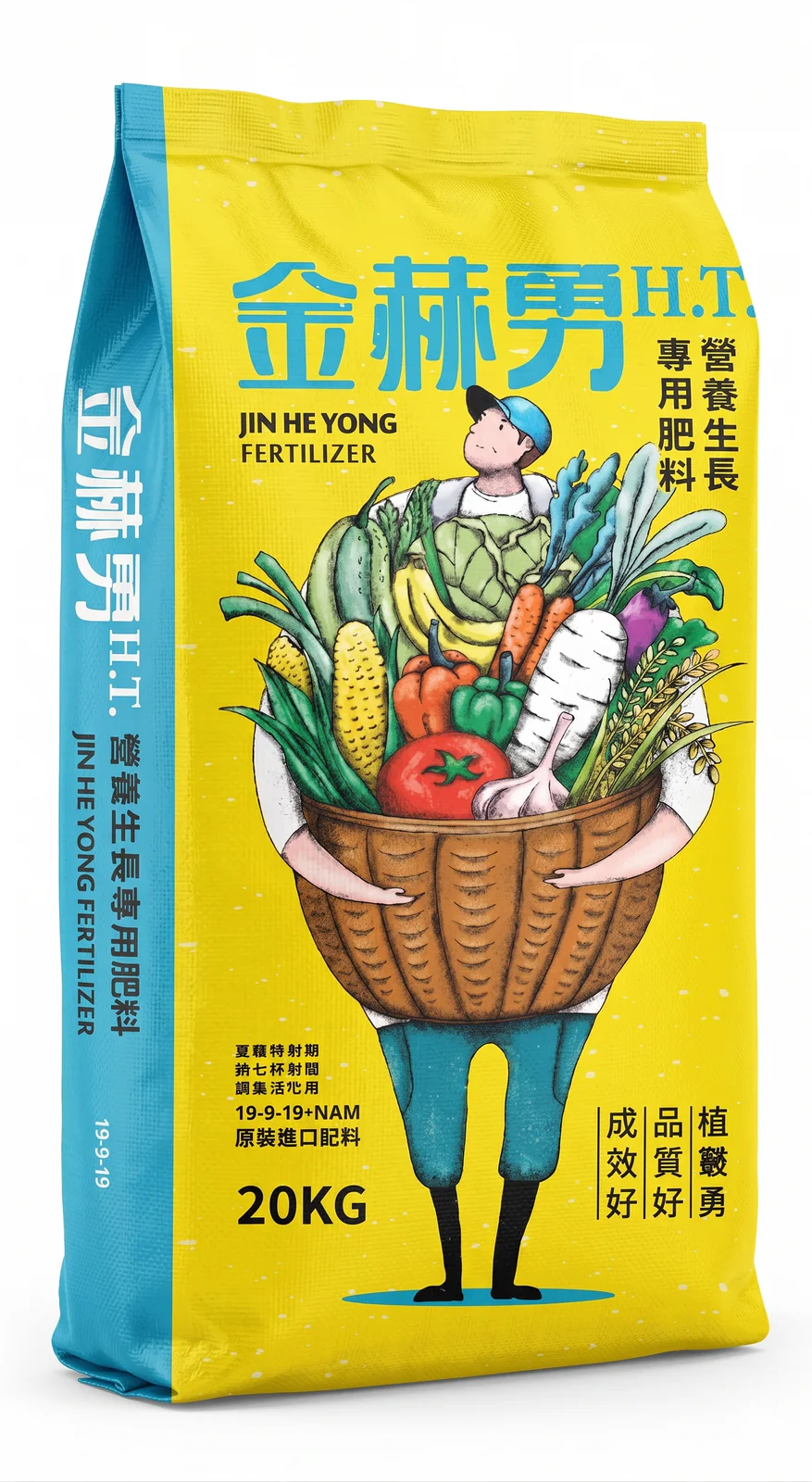
HERMEN Jinheyong H.T.
Jinheyong H.T. (19-9-19) is a high-nitrogen, high-potassium fertilizer for the tillering and panicle stages, described on its product page as supporting fast growth and sturdy stems. Follow the label and stay within the recommended rates above rather than adding on top of them.
References
Lee, C.F.: Benefits of rational fertilization for rice, Taichung District Agricultural Research and Extension Station.
Taichung District Agricultural Research and Extension Station: Low-cost rice cultivation management, Harvest Farm Magazine vol. 58 (Nov 2008).
Hsu, C.F.: Rational fertilization of Kaohsiung No. 145 rice, Kaohsiung District Agricultural Research and Extension Station.
Agriculture and Food Agency (MOA): Crop Fertilization Manual, 2024 edition — rice.
FAQ
Most often from excess nitrogen: lush plants with weak stems fall in late-season rain or typhoons. Dense planting, poor drainage, variety and disease add to the risk.
The Crop Fertilization Manual recommends 110–140 kg N/ha for the first japonica crop in central, southern and eastern Taiwan and 90–120 kg N/ha for the second. Farmer practice at the Shetou demonstration was 270 kg N/ha.
Not over large areas — it damages roots. Drain the field, check whether panicles are in water, and consider early harvest depending on maturity and weather.
No. The usual problem is too much nitrogen, which potassium cannot offset. Bring nitrogen back to recommended rates first, then apply potassium by soil test; silicate slag can be used on acidic, low-silica paddies.