01
Ammonium goes in
Urea or ammonium fertilizer first exists as ammonium, which is positively charged and held by soil particles.

HT-DMPP stabilized nitrogen
Once nitrogen fertilizer is in the soil, microbes convert ammonium to nitrate. Nitrate is not held by soil particles, so heavy rain or irrigation can wash it away, and a large early flush of nitrogen makes crops grow soft and leggy. This program uses the HT-DMPP nitrification inhibitor to slow that conversion, keeping nitrogen in the root zone longer and supplying it more evenly, combined with stage-based rates — less loss, no overgrowth.
Nitrogen drives leaf and shoot growth — and is the easiest nutrient to waste.
DMPP (3,4-dimethylpyrazole phosphate) is a widely studied nitrification inhibitor. It temporarily suppresses the step that turns ammonium into nitrate, so more nitrogen stays as ammonium; how long it lasts depends on soil temperature and moisture.
Urea or ammonium fertilizer first exists as ammonium, which is positively charged and held by soil particles.
Nitrifying bacteria convert ammonium to nitrate, which is negatively charged, not held by soil and easily leached.
The inhibitor temporarily slows nitrification, keeping nitrogen as ammonium for longer and smoothing supply.
Split applications by growth stage and a capped season total align supply with when the crop needs it.
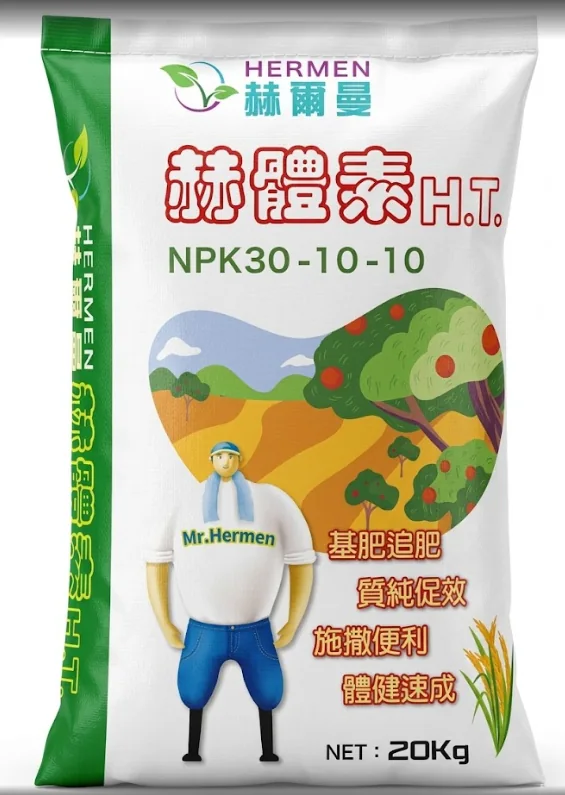
Hetisu H.T. (NPK 30-10-10) is the product labelled with HT-DMPP nitrification inhibition. Follow the label rate and count it within the season’s nitrogen total.
DMPP (3,4-dimethylpyrazole phosphate) is a nitrification inhibitor. It temporarily slows the conversion of ammonium to nitrate in soil, so nitrogen stays as ammonium longer and is less easily lost.
Ordinary ammonium fertilizer turns into nitrate fairly quickly and can wash out in rain; stabilized nitrogen adds an inhibitor that slows the conversion for a steadier supply.
It helps reduce loss, but rates should still start from recommendations and be adjusted to leaf colour and growth; do not cut rates sharply on your own.
Wet, sloping or sandy fields where nitrogen is easily lost, and leafy crops that tend to overgrow early.
Contact HERMEN on LINE and an agronomist will assess your crop and field one to one.
Ask us on LINE