01
Side-band beside the roots
The applicator drills granules into the soil beside each row; on the Kaohsiung station’s improved machine about 95% reached 8–10 cm depth.

Graphene-coated controlled release
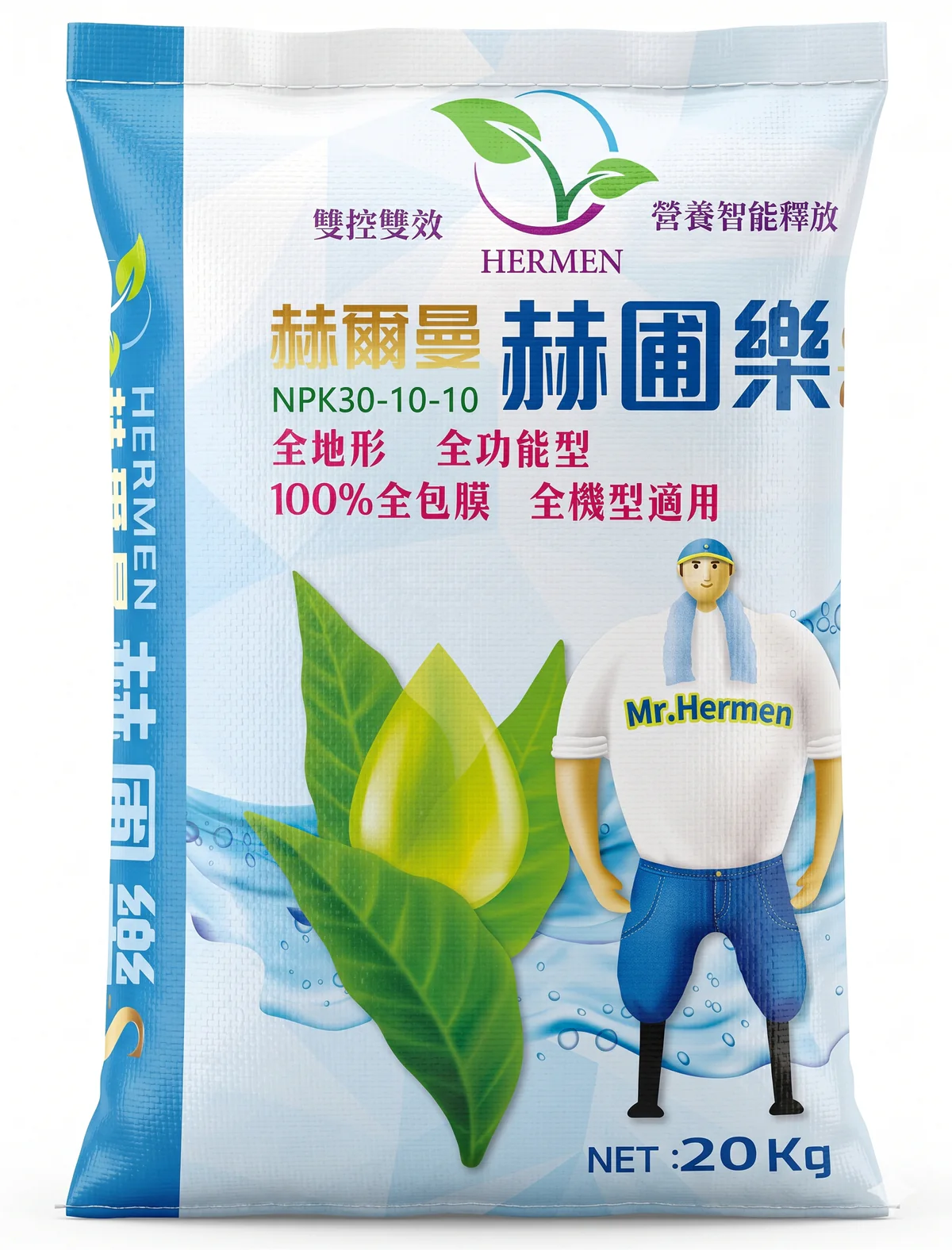
A fertilizer applicator on the rice transplanter places granules in the soil beside each row as it plants, and a coated controlled-release fertilizer releases nutrients through the season, so most topdressing is done in one pass. In mechanised deep-placement trials by Taiwan’s Kaohsiung District Agricultural Research and Extension Station, this used about 30% less nitrogen and 2–3 fewer applications than hand broadcasting. Hepule S (NPK 30-10-10, Taiwan import registration 0955040) is designed for transplanter side-band placement.
Rice needs several topdressings a season, each needing labour and the right weather.
Two things make it work: putting fertilizer in the right place (in the soil beside the roots) and matching release to when rice takes up nutrients.
The applicator drills granules into the soil beside each row; on the Kaohsiung station’s improved machine about 95% reached 8–10 cm depth.
The coating controls how fast water enters and nutrients leave, avoiding an early surge that burns seedlings.
Nutrients release gradually with soil moisture and temperature, reducing topdressing at tillering.
Check leaf colour and tillers mid-season; top up lightly only if leaves are clearly pale, and add no nitrogen if they are dark.
Start from Taiwan’s Crop Fertilization Manual: about 110–140 kg N/ha for the first japonica crop in central, southern and eastern Taiwan and 90–120 kg N/ha for the second. Nitrogen needed ÷ nitrogen percentage = kilograms of fertilizer.
A large dose of quick-release high-nitrogen fertilizer next to the roots can. Coated controlled-release fertilizer at recommended rates lowers the risk.
In Kaohsiung station trials, mechanised deep placement used about 30% less nitrogen and 2–3 fewer applications than hand broadcasting; actual savings depend on the field and season.
Much less, but check leaf colour and tillers mid-season; top up lightly only if leaves are clearly pale or tillers are short, and add no nitrogen if leaves are dark.
Even, dry, non-caking granules that will not clog the applicator; for a full-season single application, a coated controlled-release fertilizer.
Contact HERMEN on LINE and an agronomist will assess your crop and field one to one.
Ask us on LINE